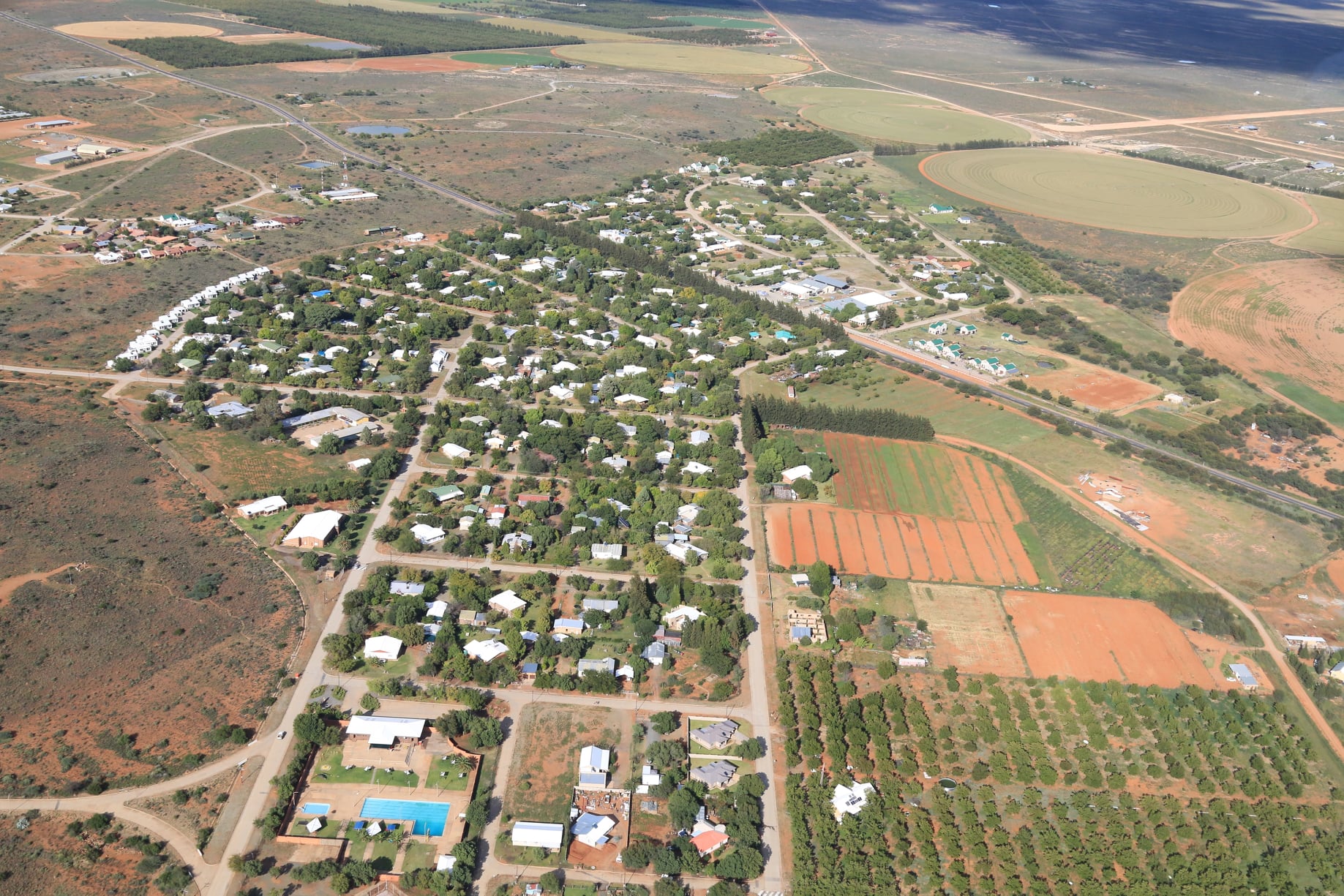
截至 2026 年,奧蘭尼亞是一座坐落在乾旱沙漠之中、人口 3,025 且持續增長的小鎮。酷寒的冬天、灼熱的夏天、難以預測的天氣和與世隔絕的氛圍,讓習慣了都市生活的國際化阿非利卡人很難在此定居。最近的城市布隆方丹(Bloemfontein)車程約兩個半小時,開普敦和約翰尼斯堡更是遠在數小時之外。這座小鎮除了人之外,僅有的資產就是擴張的空間和奧蘭治河。雖然奧蘭尼亞人能夠吸引人才,但他們所處的環境絕算不上理想。既然可以住在 Val de Vie——開普敦郊區一個漂亮得像堡壘一樣的社區,還能繼續享受傭人服侍——有錢的阿非利卡人為什麼要住進奧蘭尼亞?
奧蘭尼亞最大的優點和最大的弱點,是同一件事:鎮民對自己刷馬桶、自己割草坪這件事有著毫不鬆懈的執著。大多數領著像樣薪水的白人南非人,早就習慣僱用黑人和混血家傭。自從 Jan van Riebeeck 在桌灣(Table Bay)插上他的國旗以來,白人一直津津有味地剝削著黑人和棕色人種的勞動——那種津津有味令人不安。四百多年來,黑人與棕色人種的男男女女充當過性伴侶、事實上的妻子、奶媽、廚師、清潔工、工廠工人、沒有工會保護的勞工和代理父母。現代南非歷史上從來沒有一個時刻,黑人和開普混血人種(Cape Coloureds)不是在做著大部分卑微的工作,而這一切至今沒有停止,即使黑人資產階級已然崛起。
A PLACE TO STAND! A PLACE TO GROW! ORANI ANI ANI-A! (That’s a cheeky reference to the 1967 song, “A Place to Stand, A Place to Grow.”)
The anger around ICE and the perceived excessiveness of its deportation campaigns has been a clarifying moment for the dissident right. We can no longer deny it: huge swathes of Westerners view white identity politics with profound contempt. Many of them will take action against anything they perceive as remigration. For them, and perhaps for the median voter, continued diversification is not just non-negotiable. It is now a moral necessity.
This has led many right-wing social media enthusiasts to fantasize about Orania, a small town of 3,025 people that has proven voluntary segregation need not be violent or exploitative. The quirkiness and earnest beliefs of its residents have attracted surprisingly sympathetic coverage from mainstream and progressive media. When you watch videos about the town, you can see mutual respect form.
However, storms are brewing. Orania’s material success has sparked furious envy among Black South Africans. What used to be an insignificant desert town now has the potential to become a small but visible city.
I first met Joost Strydom at a Young Republicans meetup in New York City. He and his fellow Oranians were special guests at an oversubscribed, standing-room-only event. Everyone wanted to know how and why Orania worked, and the delegation was more than willing to share its experiences. Joost and I had been acquainted via social media, but meeting him and the others in person felt special. They just seemed like solid folk with good intuition. If they had an ulterior motive, it wasn’t perceptible.
Naturally, I asked every question in my arsenal. “Is Orania the Volkstaat?” Joost, the leader of the Orania movement, had clearly heard it all before, but he still gave me an honest answer. “No, we are not the Volkstaat.” “So what is Orania supposed to be, then?” I said. “We are a cultural community,” he replied.
ORANIA, Not for the Faint-Hearted
While “cultural community” sounds like one of those clunky Afrikaans literal translations, it’s the closest thing to an accurate description.
Orania is not a white ethnostate, nor is it the nucleus of an independent Afrikaner state as once intended. If it truly were the nucleus of a potential state, it would likely not survive the wrath of the South African government. Orania owes its continued existence to its uniqueness and unthreatening nature.
Until very recently, Orania’s existence was a bugbear among both educated liberal Afrikaners (verligte) and more conservative traditionalists (verkrampt). Enlightened Afrikaners view Orania as an unhelpful band of apartheid nostalgists at best and a malignant force at worst. Conservative traditionalist Afrikaners are happy it exists, but are put off by its distant and unusual nature in Afrikanerdom. The fact that it’s nine hours away from the Western Cape’s bucolic havens (Boland) and equally far from the hallowed dusty grounds of East Pretoria (Transvaal) doesn’t help.
As of 2026, Orania is a small but growing town of 3,025 in the middle of an arid desert. With freezing winters, scorching summers, unpredictable weather, and an isolating atmosphere, it’s difficult for cosmopolitan urban Afrikaners to live there. The closest city, Bloemfontein, is about 2.5 hours away by car. Cape Town and Johannesburg are hours away. The only assets the town has, aside from its people, are its ability to expand and the Orange River. While Oranians can attract human capital, they’re not operating in an ideal environment. Why would moneyed Afrikaners live in Orania when they could live in Val de Vie, a gorgeous fortified Cape Town suburb where they can still be served by the help?
What’s the Sauce?
The key to Orania’s success, more than competent administration and clean politics, is its rigorous immigration system. Orania has selective, discriminating criteria that favor the toughest men and women.
An Oranian isn’t just fluent in Afrikaans, reasonably devout, and immersed in their people’s traditions. If being faithful to faith, culture, and nationalism were sufficient, Orania would be a city of two million. Prospective Oranians need to prove they are financially stable, drug-free, and crime-free. Cohabitating couples are encouraged to marry, and homosexuals aren’t actively recruited. I surmise that Orania also places a premium on expanding families and expecting couples.
The town has become infamous for kicking out people who become dependent on others or who have high needs that cannot be met. Living in Orania isn’t for the faint-hearted. The community is not afraid to enforce its standards rigorously. That rubs many an Afrikaner, especially those accustomed to a different lifestyle, the wrong way. This is one of the reasons the population grew at a snail’s pace until the 2010s.
ROLL UP THOSE SLEEVES!
Orania’s greatest strength and weakness are its people’s unrelenting commitment to cleaning their own toilets and mowing their own lawns. Most White Africans with decent salaries are accustomed to having Black and mixed-race domestic servants. Ever since Jan van Riebeeck planted his country’s flag on Table Bay, Whites have exploited Black and Brown labor with disconcerting relish. For more than 400 years, Black and Brown men and women served as sexual companions, informal wives, nursemaids, cooks, cleaners, factory workers, non-union laborers, and surrogate parents. There was never a time in modern South African history when Blacks and Cape Coloureds were not doing many or most of the menial jobs, and that has not stopped, even with the rise of the Black bourgeoisie.
During the final days of apartheid, many hard-edged conservative Afrikaner individuals believed that their personal and collective dependence on Black labor had been their undoing. Apartheid wasn’t just a moral obscenity; it had undermined the legitimacy of separateness. If Afrikaners were ever going to have their own country, they would need to be the majority. How can there be an Afrikaner state if most of your people aspire to having their own domestic worker?
Orania’s “Own Labour” policy is the closest thing to a supreme law in the town. I cannot stress this enough. There would be no Orania without its Own Labour policy.
Why? It is because thousands of wealthy South Africans of all races live among their own and insulate themselves from state failure by huddling in estates. These places have private guards and working generators towithstand the worst dysfunction. Others are safehouses for citizens preparing to emigrate. If Orania were to start allowing even a small amount of Black and Brown people to work on construction projects or care for the elderly, its entire raison d’etre collapses. Orania would go from being a powerful and polarizing example of self-determination to a scruffy HOA full of eccentric Boers who chose to live in the middle of nowhere. And for what? To feel in control.
Some Oranians believe that the town’s growth can be accelerated by tweaking their Own Labour policy. Joost himself had admitted that their most cherished values were constraining growth. During our many talks, I gained the impression that he was growing tired of having to explain the importance of Own Labour to well-meaning outsiders and ambitious insiders. It shows that even the slightest success can distort anyone’s perspectives and saying “no” is part of good leadership.
Are there any Lessons for the West?
There aren’t really that many lessons to be taken from Orania and South Africa. Even if the Western world were to continue diversifying at an even faster pace, Westerners will still have (just) enough time to dig ditches and consolidate their position. Moreover, as much as the left thinks otherwise, historically white countries were not apartheid states. That knowledge keeps them from demanding genuine expropriation. Different contexts require different solutions and perhaps even different institutions. Having experienced the swift loss of power, status, and numbers, the Afrikaners were forced to choose between two paths. They could either embrace the Rainbow Nation or run for the hills. Verligte Afrikaners embraced the former by trying to build up the Democratic Alliance. Unlike Afrikaners, Westerners still have options and the luxury of time. Even so, remigrationists and their allies are still cultivating a sense of urgency.
Orania is just one spoke in the ever-expanding wheel of the Solidarity Movement. In just 30 years, a tight band of traditionalists has built up a collection of effective parallel institutions. This network now encompasses education (Akademia/Sol Tech), media (Maroela Media), some aspects of welfare (Helpmekaar), property development (Kanton), and extra-parliamentary politics (Afriforum). Since 2021, they’ve become globally infamous for their forthright manner and blunt rhetoric. While Westerners do have much to learn from them, we’re going to have to come up with our own ways to deal with the effects of continued stagnation and anti-Westernness.
For now, Orania serves as a shining example of the power of doing something without permission and freedom from self-indulgence and self-doubt. If nothing else, their hard work has given them options. We should all do the same in our own countries, wherever we may be.