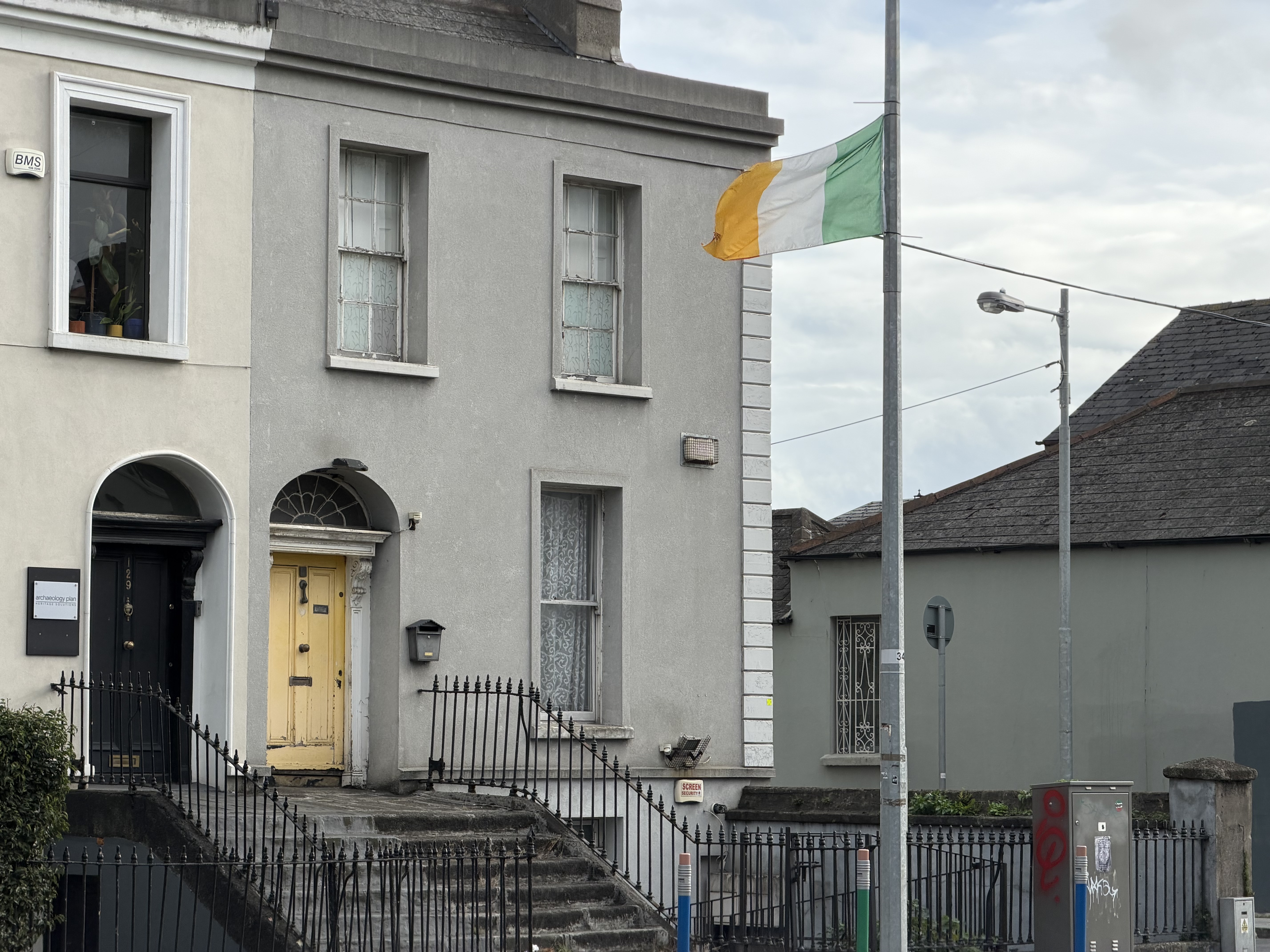
到你讀到這篇文章時,我應該已經從一趟昂貴的愛爾蘭假期回來了。這趟旅程包括在都柏林住兩晚,以及在凱里郡的 Park Kenmare 酒店度過美好(雖然沒什麼活動)的四晚。托全球暖化的福,我運氣不錯地曬到了一點太陽,但沒有人是為了天氣、美食、或是它前衛的豪華住宿方式而去愛爾蘭的。數以百萬計的遊客去愛爾蘭,是為了和愛爾蘭人一起玩樂——那是一群討人喜歡又讓人累垮的人。
我不知道為什麼。經過多年試圖理解他們的心態,我跟你也差不了多少,所以這裡只提供五分之一個解釋,透過政治經濟學的視角。愛爾蘭人是口舌靈巧、直覺敏銳的思考者和行動者,懂得按中某個人或某件事的要害按鈕來為自己謀利。幾個世紀以來,愛爾蘭人創造出的藝術、科學、文學與創新,足以媲美西歐其他地方的產出。只要你把愛爾蘭式英語的特殊腔調、或他們的藝術與文案在創傷造成的疏淡與過度堆疊的音樂性之間奇怪切換的方式算進去,Naoise Dolan 和 Michael Scott(那位建築師)跟 Alan Sillitoe 和 Alison Brooks 其實沒有太大分別。愛爾蘭人同樣懷有定義了歐洲歷史的那種疏離與孤絕感。跟英國人、斯洛伐克人和葡萄牙人一樣,他們也在同一場尋求穩定共同體的長征上。愛爾蘭的與眾不同之處,在於一種充滿本土蓋爾與墾殖者辛辣味的文化,讓發達世界的大多數人覺得它幾乎帶有異國情調。正是這種特別的瘋癲,自維京人渡海來搶他們的女人之日起,一直是愛爾蘭的獨門賣點。
而且因為這一切都在歐盟境內進行,技術上完全光明正大,即使布魯塞爾的官僚們看著這個奇蹟發生時咬牙切齒。你最聰明的歐洲實驗室書呆子和最高飛揚的高管混蛋,也許人在國王十字車站和卡倫堡,但讓這一切成為可能的,是那些拿著高薪、流血流汗的都柏林人——為的是讓美國產業永遠不必操心自己的稅務問題(以及其他種種)。其結果,就是現代愛爾蘭共和國這個成功得驚人、卻透明得令人心疼的政體。Sarah 也許參與生產讓 Mounjaro 發揮藥效的特殊成分,但她仍然開車去英治的 Newry 買更便宜的藥。Mark 也許靠著幫 Apple 極大化研發稅收抵免賺五十萬歐元,但當他需要感受一下 Apple Store 的體驗時,還是搭火車去貝爾法斯特。Morven 再漂亮再聰明,也知道她無法讓 Sand Hill Road 為了分一杯她那顛覆性的奢侈電商平台之羹而親自來找她。於是她認命地把自己奉獻給 SFO 與希斯羅機場之間二十年的紅眼航班。價值數兆美元的人力資本和真才實學,就這樣不斷被錯配濫用。
美國的稅制改革者現在正花費數以百萬計的人工小時,設計完美法律來促使 Apple 和 Google 把利潤搬回家。歐盟監管機構對大膽的稅務競爭和糖衣補貼越來越敵視,也越來越堅持要都柏林的吹捧者記住愛爾蘭到底位於哪個大洲。而國際組織如今也加入行列,透過讓人死於令人麻木的文書作業來限縮跨國企業的騰挪空間,約束它們的花樣把戲。
By the time you read this, I’ll have been back from an expensive Irish vacation. My trip consisted of two nights in Dublin and four wonderful (if inactive) nights at the Park Kenmare Hotel in County Kerry. While I was lucky to get a bit of sunshine thanks to global warming, nobody comes to Ireland for the weather, the cuisine, or its avant-garde approach to luxury lodging. Millions of tourists come to Ireland to frolic with the Irish, an endearing and exhausting people.
Why are the Irish like that? Why are Irish boomers so proud and bullish, and Irish teenagers and twentysomethings pessimistic and perennially disdainful of anything that smacks of classical liberalism? Why do so many of them feel the need to be pugilistic Gaelic warriors on social media when they are probably sitting on the couch eating sour onion potato chips while watching a Premier League game? Why do so many Irish twenty-somethings, who insist their country is richer, healthier, and better governed than England, still tune into Love Island and often spend the best years of their lives in London?
I’ve no idea why. After years of trying to understand their mindset, I’m no closer than you are, so here’s one-fifth of an explanation through the lens of political economics.The Irish are verbally tactile, highly intuitive thinkers and doers who know how to press someone or something’s buttons to their advantage. For centuries, Irish people have produced art, science, literature, and innovations that rival those produced in other parts of Western Europe. Once you account for the peculiar sound of Irish English or the strange way their art and copy alternate between trauma-induced sparseness and overwritten musicality, Naoise Dolan and Michael Scott (the architect) aren’t all that different from Alan Sillitoe and Alison Brooks. Irish people share the same sense of alienation and isolation that defined European history. Like the British, Slovaks, and Portuguese, they're also on the same long quest for a stable community. What distinguishes Ireland is a culture filled with indigenous Gaelic and Planter spiciness that makes it feel almost exotic to most people in the developed world. It’s this special zaniness that has been Ireland’s USP since the Vikings came over to steal their women.
Despite its once-prodigious birthrates, astounding levels of human capital, and historic participation in British imperial exploration and the links that come with it, Ireland remains a tiny and peripheral island off the coast of Northwestern Europe. With a population slightly smaller than Hong Kong's and surprisingly few natural resources, it is incredibly difficult (but anything but impossible) for any business or institution to scale up and compete globally. Unlike Poland or Denmark, Ireland has no road links to Germany and Italy. Unlike Singapore or Hong Kong, South Dublin bankers can’t skim off the top from Chinese and Indian manufacturers, and North Dublin consultants can’t demand professional rents from anyone. What’s more, Oxford and Bristol are only a short plane ride away. Any bright spark with an even brighter life-changing widget or app could easily move to Silicon Roundabout or Silicon Valley. This unenviable situation is why the Irish State moves heaven and earth to attract American investment.
The average Irish person is as rich as the average Dane, but doesn't enjoy the public services that such enviable productivity ought to provide. Some say Amanda in Ealing lives way beyond her means, while Aoife in Edenmore is responsibly frugal, but that doesn't change the fact that the latter’s enviable wage is eaten up by high rents, costly utilities, and a merry-go-round of petty taxes. Even a bowl of chowder and a pint of beer on a Friday night can feel expensive. Once you understand this, you’ll understand why Ciara often looks out the window by the time she’s finished eating your fries.
For much of Irish history, malinvestment and peripherality consigned Ireland to being the poorest country in the rich world. So how did it become one of the world’s most successful countries?
Starting in 1958, Ireland performed an incredible act of developmental jiu-jitsu (albeit in a long, drawn-out, and complicated manner). In short, it turned its peripherality into both a strength and a weakness by attracting billions upon billions in foreign investment. Gradually, then suddenly, corporate America began building offices, factories, and infrastructure in the Republic. Many of these investments, such as Shipbuilding and Steel, went spectacularly poorly. Other bets, like semiconductors and pharmaceuticals, ended up printing money. However, the real moneymaker became Irish people themselves.
By 1990, Ireland was no longer an interesting little place where firms could take advantage of cheaper, educated labor. The Republic was effectively the world’s most indispensable gigantic tax-and-talent arbitrage and access system. If you needed something difficult done out of sight and out of mind, the Irish could do it for you and throw in a wonderful vacation.
Irish accountants and commercial directors could dream up schemes to help Californian corporations save and make money. Irish research scientists could redesign New England computer chips and make them cheaper for Chinese and Taiwanese manufacturers to construct.
Irish factory cleaners and sanitation experts could clean up and mitigate the egregious levels of run-off and waste that manufacturing skinny jabs tends to create. Irish civil servants and ministers didn’t make unreasonable demands, like requiring companies to share trade secrets or “partner” with a favorite hometown firm.
And because this was all done within the European Union, it was technically above board even as Brussels Bureaucrats gritted their teeth seeing this miracle happen. Your smartest European lab nerds and highest-flying C-suite bastards may have been in King’s Cross and Kalundborg, but the people who made it possible were well-paid Dubliners who sweat blood so American industry would never have to worry about its tax affairs (among other things).The result is the incredibly successful but painfully transparent polity that is the modern Republic of Ireland. Sarah may help manufacture the special ingredient that makes Mounjaro work, but she still drives to British-administered Newry for cheaper meds. Mark may make half a million euros helping Apple maximize its R&D tax credits, but still takes the train to Belfast when he needs to feel the Apple Store experience. Morven, however gorgeous and brainy, knows she can’t make Sand Hill Road come to her just to get a piece of her transformative luxury e-commerce platform. So she resigns herself to spending two decades on red-eye flights between SFO and Heathrow. Trillions of dollars worth of human capital and genuine talent are continuously misused.
Will this ever change?
Ireland’s fortunes, however hard-earned, are now in jeopardy, and people there know it all too well. European Commissioners and Bruges-based poindexters are no longer content to see Ireland act as America’s capital keyhole into the EU and the EU’s premium multipurpose platform for paying customers.
American tax reformers are now spending millions of man-hours trying to craft the perfect laws that incentivize Apple and Google to bring their profits home. EU regulators are increasingly hostile to adventurous tax competition and sweetheart subsidies and are increasingly insistent that Dublin boosters remember which continent Ireland is located on. And international organizations are now joining the effort to restrain multinational funny business by limiting their room to maneuver through death by mind-numbing paperwork.
While past attempts at discipline were ameliorated by personal goodwill and diplomatic intimacy, a new generation of Eurocrats are far less deferential to their Irish counterparts. For us political junkies that came of age during Brexit, this is genuinely shocking.
Even the Baby Boomers that provided the demographic and intellectual fuel for the boom accepted that things must change. Not a day goes by without some entrepreneurial pontificator from Dublin 7 demanding their nation’s stodgy pension funds start investing heavily in an exciting industry. For thirtysomethings like Steven, the overworked pharmacist I met who spends every Thursday night at the Merrion Hotel with a glass of red wine, prosperity feels more than a touch theoretical. He and his generation know they have it good compared with their peers, but how successful are they after accounting for all the lifeblood they donate to bigwigs during the day? He can’t even afford a respectable mortgage.
Conclusion?
But why even worry about this when the Republic is booming? Why even care about housing costs and the sustainability of corporate tax receipts when there’s money to spend and experiences to enjoy?Let’s assume Eire’s political bubble is right and the condescending, pointy-headed professors are wrong; the corporate tax bonanza has no end. That type of complacency is the true cause of genuine decline.
For nations to stay great (never mind powerful), they need to keep changing. Just as a country house or a lovely seaside bistro needs constant scrubbing and periodic renovation, a nation needs people to keep questioning conventional wisdom and endure (perhaps eternal) discomfort so others can live healthier, more luxurious lives.
The alternative to creative destruction isn't a perfect equilibrium of intergenerational bliss; it's your great-grandchildren realizing that all the money they are free to spend doesn't change the fact that true opportunity lies outside the walls of a shining city on a hill.
So, what does the next Irish economic model look like? I don’t know. If I did know, I’d use my insights to rejuvenate Britain’s economy. I am from Hong Kong, after all.