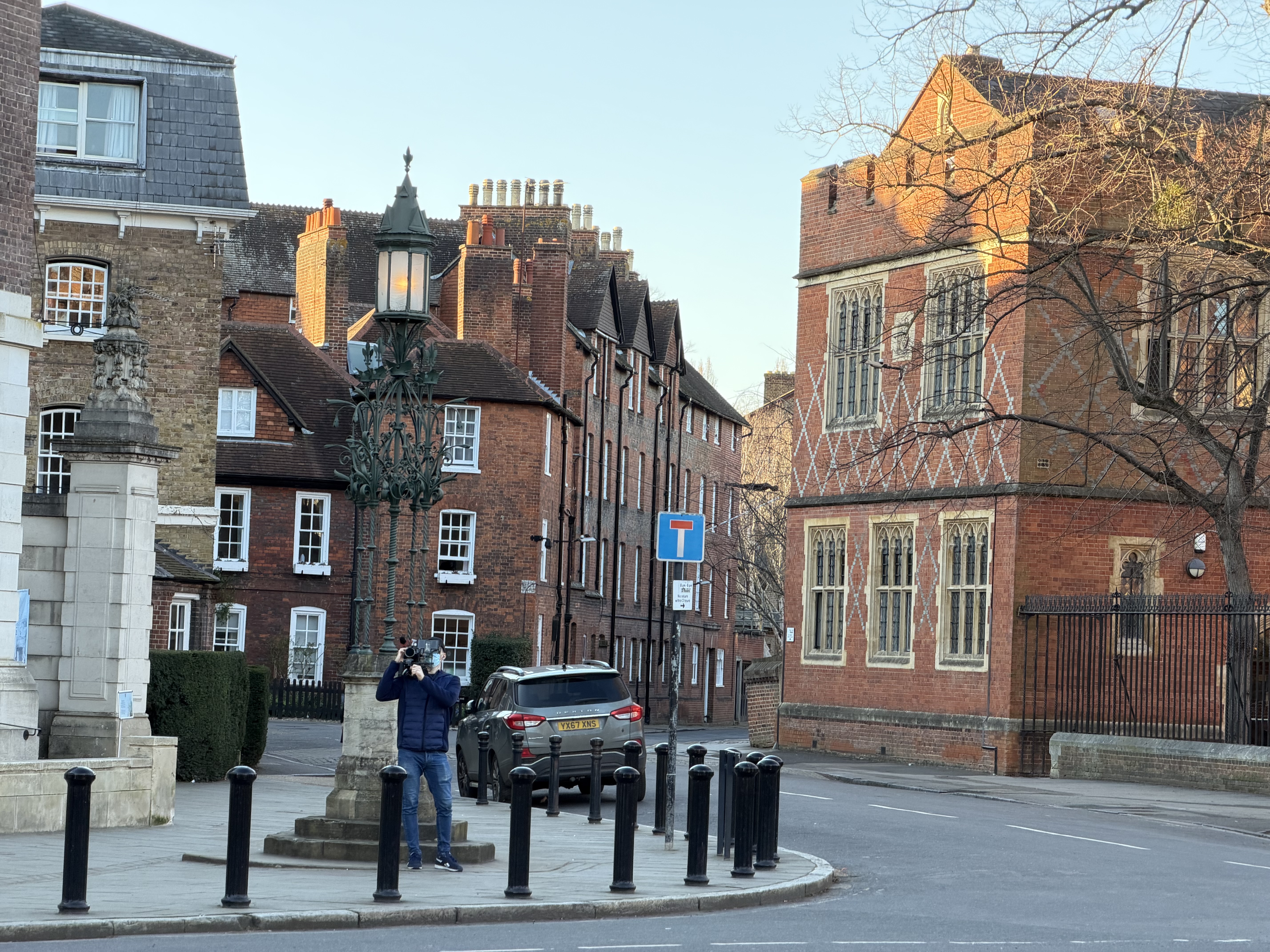
第二起事件發生在我們溫莎拍攝接近尾聲時。我們正準備收工,一個四十多歲的女人走近 Ed,暗示他因為拍攝青少年學生而惹上了麻煩。儘管我們連伊頓公學的校園都沒踏進,也沒和任何學生或教職員互動,她還是試圖擺出權威的口吻。「這裡有小孩,」她說。雖然明顯疲憊,Ed 再度火力全開:「抱歉,我沒有違反任何法律。我們在公共場所,也沒有侵入你們的空間。法律就是法律——你要的話我可以引用給你聽。」那個女人退回了校園方向。事後 Ed 告訴我和攝製組,像她這樣的人靠道德綁架達到目的,所以你絕不能讓步,必須站穩立場。近距離目睹他的好鬥,多少有點不太賞心悅目。
拍攝中最讓我開眼界的,是親眼看到斯勞半破敗的狀態和發展的不均衡。它曾是白人工人階級社群的一個強大中心,如今是一個受惠於 AI 相關投資的多元城鎮。我們從火車站開始拍攝,一家巨型超市緊鄰一座多層停車場。旁邊立著一棟乏味的辦公樓,看上去像是成本工程師和資淺建築師之間妥協的產物。顯然這個鎮渴求投資。居民對小鎮正在好轉似乎持審慎樂觀的態度,但主幹道給人的感覺像一座廉價的露天商場。一位年長的亞裔男子感嘆他的白人工人階級朋友們一一慢慢離開。龜裂的地板、空蕩蕩的連鎖餐廳、關門歇業的夫妻店,都讓人沮喪。雖然公共環境尚可,卻始終瀰漫著一種底層的死氣。
溫莎的本地人反應更敏銳,回答也更連貫。他們許多不是家境優渥,就是從事醫療行業。Ed 交手過的較好鬥的進步派之一,是僅存的最後幾家獨立紀念品商店的老闆。他極力反駁 Ed 的前提,並暗示英格蘭的多元化是一段漫長歷史進程的一部分。那位親巴勒斯坦的自行車手繞了回來,接受了另一次採訪。雖然比店主更客氣、更有良知,他同樣對有關人口變遷的問題不屑一顧。公平地說,他並沒有明顯的敵意——他試圖用讚美和打哈哈來緩和氣氛。「沒有多元你怎麼活得下去?我們在一起好多了。能跟其他文化一起學習、一起生活,我自己就受益良多,」他說。我們在伊頓公學老校區附近結束拍攝,Ed 在那裡慷慨激昂地朗誦了一段世紀中期的英國詩歌。不幸的是,我能專注的只有散落在溫莎各處的一小堆一小堆垃圾。
Three weeks ago, the Jolly Heretic invited me to his old country of England. He and his team were filming two major documentaries about the state of Middle England, focusing on the towns of Slough, Windsor, and Oxford. The goal was to document and comment on the effects of Britain’s demographic change and economic stagnation in these very different locales. By the end of the trip, I had far more experiences than I bargained for. This article isn’t a summary of the films—you can watch those yourself. Instead, it’s about what I saw in those three towns and how I felt during the shoot.
The first thing readers should know is that Ed Dutton is a dynamic, incorrigible personality both on and off camera. He’s an intelligent street fighter who has no problem speaking his mind and diving into verbal scraps. Two moments stand out. During our shoot in Slough, a creepy busybody trailed us, filming with his phone. The unkempt late-twentysomething looked every bit the Reddit warrior and had no qualms trying to shame Dutton. “Why are you here? What are you doing here? I want to know your motives,” he demanded. As soon as Ed noticed him, he laid it on thick: “This is a public space. We have every right to film here. You’re a spiteful mutant with no purpose beyond shaming people for thinking differently.” Eventually, the puffed-up hero scurried away. Ed remained unfazed, and the crew was finally free to continue filming.
The second incident happened toward the end of our shoot in Windsor. As we were wrapping up, a fortysomething woman approached Ed and implied he was in trouble for filming teenage students. Even though we hadn’t stepped onto Eton College’s campus or interacted with any students or staff, she tried to sound authoritative. “There are children here,” she said. Though visibly exhausted, Ed laid it on thick once more: “I’m sorry, but I haven’t broken any law. We’re in a public place and haven’t intruded on your space. The law is the law—I can cite it for you if you like.” The woman retreated toward the campus. Afterward, Ed told the crew and me that women like her rely on guilt-tripping to get their way, which is why you should never give in and must stand firm. It was somewhat unedifying to witness his pugilism up close.
The most eye-opening part of the shoot was seeing Slough’s partially dilapidated state and uneven development. Once a strong hub of the white working-class community, it is now a diverse town benefiting from AI-related investment. We started filming at the railway station, where a gigantic supermarket sat beside a multi-story car park. Next to it stood a sterile office block that looked like the result of a compromise between a value engineer and a junior architect. It was clear the town was hungry for investment. While residents seemed cautiously optimistic that their town was on the upswing, the main thoroughfare felt like a cheap outdoor mall. One older Asian man lamented the loss of his white working-class friends as they slowly departed. The cracked floors, empty chain restaurants, and closed mom-and-pop stores were disheartening. Though the public realm was decent, an underlying lifelessness lingered.
Seeing corners of the town treated like a mini-dump made me question the wisdom of joining the shoot. Before reaching the high street, we came across a half-derelict two-story house. What should have been a handsome family home was now partitioned into a shabby downstairs apartment and what appeared to be a boarding house. Graffiti covered the walls, trash littered the area near the doors, and the small patch of grass was overgrown. The street wasn’t much better—aside from a fried food shop and a Bulgarian mart, it showed clear signs of long-term wear and tear. This isn’t to say the town was beyond redemption. The office blocks, police station, and council buildings bustled with productive people. What felt most damning was the sense of self-segregation: residents of every race, class, and religion seemed simply to be staying out of each other’s way. Ironically, the most optimistic person we met in Slough was a Somali migrant—a twentysomething YouTuber with infectious enthusiasm who spoke about data centers and the tight-knit community. He even offered a nuanced take on immigration and demographic change. In retrospect, he was the most sensible and even-keeled person we interviewed. He didn’t roll his eyes or act aggrieved—he simply listened and engaged.
After filming, we piled into a taxi and headed to Windsor. The contrast with Slough wasn’t as stark as I expected. While Windsor was well-kept and benefited from civic-minded residents, it was noticeably more diverse than it had been five or ten years earlier. We immediately saw an energetic Black man riding a decked-out bicycle with a portable sound system. When interviewed, he said he was raising awareness for Palestine. The shops and restaurants were a step above Slough’s but still looked somewhat tacky. I had to remind myself that we were in one of the country’s top tourist destinations, which explained the French schoolchildren and bored-looking parents. Ed kept mentioning how there were no security guards at the castle gates back in 2001. Frankly, I found it hard to believe.
The locals in Windsor were sharper and gave more coherent answers. Many were either well-off or worked in healthcare. One of the more combative progressives Ed sparred with was the owner of one of the last independent souvenir shops. He pushed back hard against Ed’s premises and suggested England’s diversification was part of a long historical process. The pro-Palestine cyclist looped back around and allowed another interview. While more polite and conscientious than the shop owner, he was similarly dismissive of questions about demographic change. To his credit, he wasn’t outwardly hostile—he tried to smooth things over with compliments and joviality. “Why would you want to live without diversity? We’re all much better off together. I certainly benefit from learning and living alongside other cultures,” he said. We finished the shoot near Eton College’s old campus, where Ed delivered a roaring recitation of some mid-century British poetry. Unfortunately, all I could focus on was the small piles of litter scattered around Windsor.
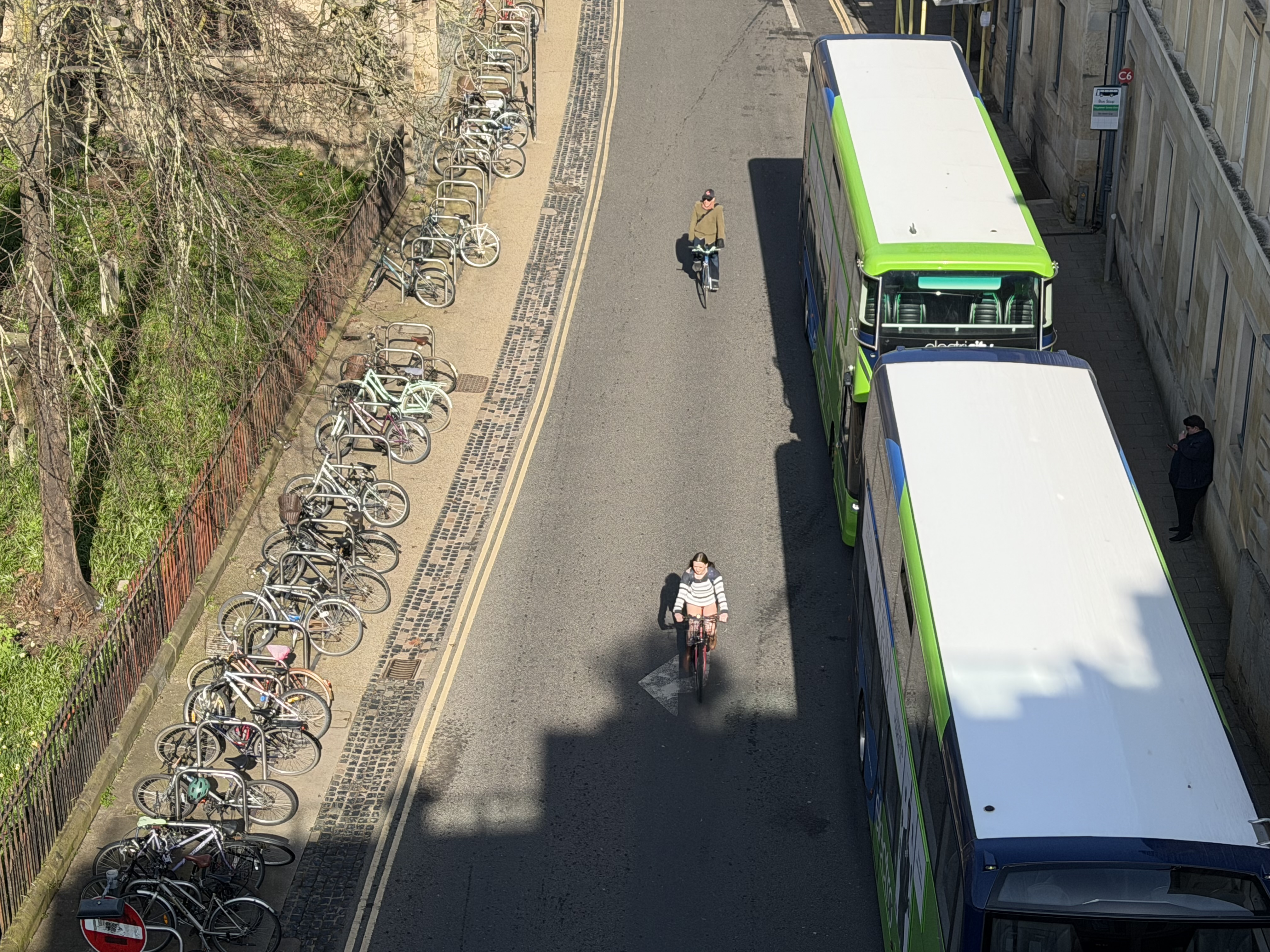
If Slough was an unevenly developing suburb and Windsor an oversold chocolate-box town, Oxford was where I realized England was far more “American” than I had imagined. I knew the college town was more urban and dense than often portrayed, but seeing it firsthand was the trip’s biggest surprise. Its absurdly elegant ancient spires and stone buildings stood alongside worn mid-century brutalist office blocks. One 1970s-era complex was being replaced with something more upmarket. The students, some in the silliest outfits, all carried the brisk confidence of young demigods. I enjoyed chatting with them during breaks.
What wasn’t enjoyable was discovering how England’s best and brightest offered the most canned responses when asked about demographic change or Reform UK’s non-white leaders like Zia Yusuf and Suella Braverman. On the first day of our two-day shoot, our cameraman, Iggy, begged me to ask tough questions. “You’re Asian and autistic—you’ve got two shields that let you ask people about English people becoming a minority in their own country.” “No, I don’t want to get my head bashed in by some zealous Antifa graduate student,” I replied. After more pleading, he reluctantly let me ask softer questions like “Why do you think people oppose diversity?” and “Do you think Reform UK’s non-white leaders are self-hating or just in it for the money?” My indirect approach didn’t yield much variety. Most of the twenty-five vox pops featured intelligent but formulaic answers: Reform UK was racist, perhaps even dangerous; its non-white leaders were self-hating, avaricious, and ambitious; people who oppose diversity weren’t all bad but needed educating on its benefits. A few were more thoughtful. One standout was a transgender medical student who noted that people from wealthy, homogeneous places—like her hometown of Jersey—might struggle with rapid change. An international student from India mentioned that Reform UK’s anti-immigration stance had wide appeal among her relatives in Britain. By the time we finished on the high street, Iggy felt we had enough footage. He praised my work ethic but was less enthusiastic about the results. “It’s okay. I’ve got enough to work with.”
The final day in Oxford featured Ed Dutton, me, and a new co-star, Lipton Matthews, filming near the Radcliffe Camera. This was the most fun part of the trip, as we leaned into our personas and hammed it up. “That’s not a camera—that’s a rotunda,” I quipped, pointing at the landmark. Sadly, partway through, I started dozing off or getting distracted by the tall co-eds around us. The producer approached me: “What’s going on, Lap?” “I took a double dose of my medication,” I admitted. “That explains it. Lap, we’ve got our footage. You should head back to the hotel and rest.” He walked me back to ensure I didn’t bother anyone. Hours later, I received a frantic call from Iggy. Lipton’s charismatic interviewing had attracted real-life maladjusted activists. “We need to lay low in your room—now!” “What the fuck is going on, Iggy?” “Two women started asking if we were from Turning Point USA and caused a scene. You’ve got to let us hide out, or we’re in deep shit.” Within half an hour, Lipton and the crew piled into my small hotel room. Once they decompressed, we raided the minibar and waited for the coast to clear. The crew left one by one. By the time I boarded a bus to London, I’d had my fill of New England and found myself wondering if Old Britannia could ever be found again.