以我的年輕選民 Sally Codina 為例。她在 Santa Monica 上課,晚上在 Arcadia 的一家壽司餐廳打工,然後搭捷運回 Long Beach 的家。憑著十足的膽識和苦幹,Sally 這個春天將從 Santa Monica College 轉學到 UC Berkeley。她是數十萬終於等到機會的、一直被忽視的加州人之一。Sally,願你以我幾十年前自己北上時的那股勁頭,牢牢抓住它。
全國沒有任何一個州,在印度機器人、日本 AGI 或墨西哥自動化農場上的投入比我們更多。我那有四分之一墨西哥血統的姪子,種出的水培芒果最甜。我最小的兒子 Stanley(大家都最愛他),雖然一句西班牙語都不會說,卻在布宜諾斯艾利斯當風險投資家混得有聲有色。沒有任何一個州迎來了更多的全球投資:數百家國際企業把它們的北美總部設在了洛杉磯。很少有哪個時刻,能勝過在 La Jolla 為 AfriVac 那座令人驚豔的北美研發園區剪綵。
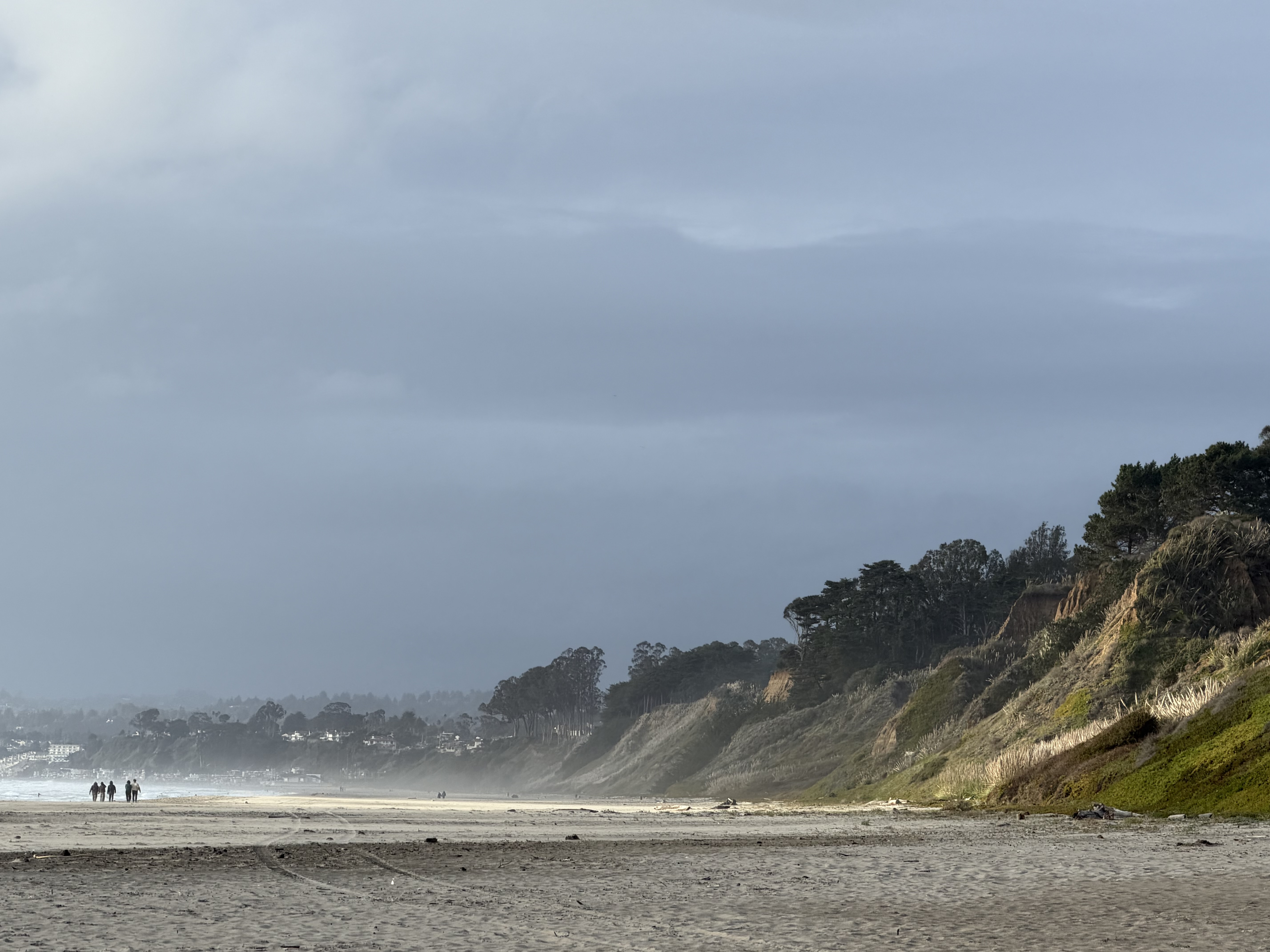
No CALIFORNIA SPEECH (tm) is complete without a picture of the coast.
Author’s Note: This is a work of alternate-history fiction set in a divergent 2026. The speech, the character of “Dandy Ron” Jorgensen, and the events described are entirely imaginary.
Good Evening,This is my final year-end address as your Premier. It’s a bittersweet moment, but I wouldn’t have it any other way. Good governance in a vast, dynamic state like ours demands the resilience forged only by uncertainty and discomfort.
Thanks for reading The Last Autistic! Subscribe for free to receive new posts and support my work.
As a young man, I rode the California High-Speed Rail for the first time. Back then, it was nothing like today’s sleek network. Everyone I knew dismissed it as “Pat Brown’s Boondoggle.” The modest train ran just from San Diego to Los Angeles, city center to city center. It wasn’t glamorous or fast, and it certainly wasn’t for surfers, but it worked.
As the system improved and held its own against freeways and airlines, Californians grew open to expanding it. Who wouldn’t prefer the Friday fast train over slogging up I-5?
I spent the first twelve years of my career as a civil engineer building those connections linking Los Angeles to San Francisco and Phoenix, Redding to Sacramento, and upgrading the Capitol Corridor. That time was dominated by long nights away from family, horrendous black coffee, and the constant abuse inflicted by exceptional men and women. Thanks to the efforts of thousands over two decades, Californians today are more physically interconnected than ever.
Take my young constituent, Sally Codina. She takes classes in Santa Monica, works evenings at a sushi restaurant in Arcadia, then rides the Metro home to Long Beach. Through sheer gumption and hard work, Sally is transferring from Santa Monica College to UC Berkeley this spring. She is one of hundreds of thousands of overlooked Californians finally getting their shot. Sally, I hope you seize it with the same gusto I felt decades ago when I headed north myself.
Stories like Sally’s, not the high salaries or the power of office, are what make public service in California so gratifying.
As your Premier, I’m proud of what we’ve built together. We privatized the Statewide Geothermal Energy Service, bringing real competition to electricity and lowering costs for families and businesses alike. Through challenging fiscal discipline, we freed vital resources for what truly matters: expanded technical schools, comprehensive retraining programs, and California’s pioneering first moonbase. These shared sacrifices are paving the way for an even brighter tomorrow for our children.
Now, let me turn to the most profound changes shaping our state: our diversity and our global ties.
Growing up in Orange County, I lived alongside friends from strong, family-oriented Asian and Latino communities. Recently, when I drove through my old neighborhood, the streets were alive with gossiping mothers and proud fathers watching over their kids, roughhousing with each other. Yet there were far fewer Latino grade-schoolers reading comics at the bus stop. My favorite Chinese restaurant had closed that week. It served the best orange chicken in the state.
California was once projected to become majority-minority. That prospect thrilled some and alarmed others. My father, a Korean War and Vietnam War combat veteran, once told me: “Son, if every capable Korean or Mexican moved here, there’d be no California left—and no Korea or Mexico to rebuild. They need to stay there and thrive. It’s our job to give them reasons to.” At the time, I thought he was being his prejudiced self. But Dad had a point, as he usually did.
No state in the union has invested more in Indian robotics, Japanese AGI, or Mexican automated farms. My quarter-Mexican nephew grows the sweetest hydroponic mangoes. My youngest son, Stanley (everyone’s favorite), thrives as a venture capitalist in Buenos Aires despite not speaking a lick of Spanish. No state has welcomed more global investment: hundreds of international firms have built their North American headquarters in Los Angeles. There were few, if any, moments that topped cutting the ribbon on AfriVac’s stunning North American R&D complex in La Jolla.
When Californians go abroad to build economies, industries, and advanced hospitals for the vulnerable, I feel immense pride. We didn’t just share our wealth. We helped others chase their own version of the California dream.
Yet I feel deep sadness seeing caravans of Latino Californians heading south across the border, or young and old Asian Californians boarding Concordes for Busan and Bangkok. I still tear up thinking of the Zhaos selling their Monterey Park home to start over in Fukuoka. I won’t lie. I feel more at ease among my own kind. I was downright ecstatic when a Norwegian family bought my friend Dean Chang’s old place in Pacific Palisades. Jorgensen is my last name, after all.
Time keeps us human. No matter how California changes, there will always be surfers flirting with lifeguards on warm sunny days, teenagers dreading swim meets, county linemen needing a short vacation, and community college sophomores rejoicing over acceptance letters. Most of all, there will still be millions of salt-of-the-earth Californians gulping black coffee to work the jobs no one else wants—so their children and grandchildren can realize their Californian Dream.
Good night, California. It’s been an honor.
Thanks for reading The Last Autistic! Subscribe for free to receive new posts and support my work.