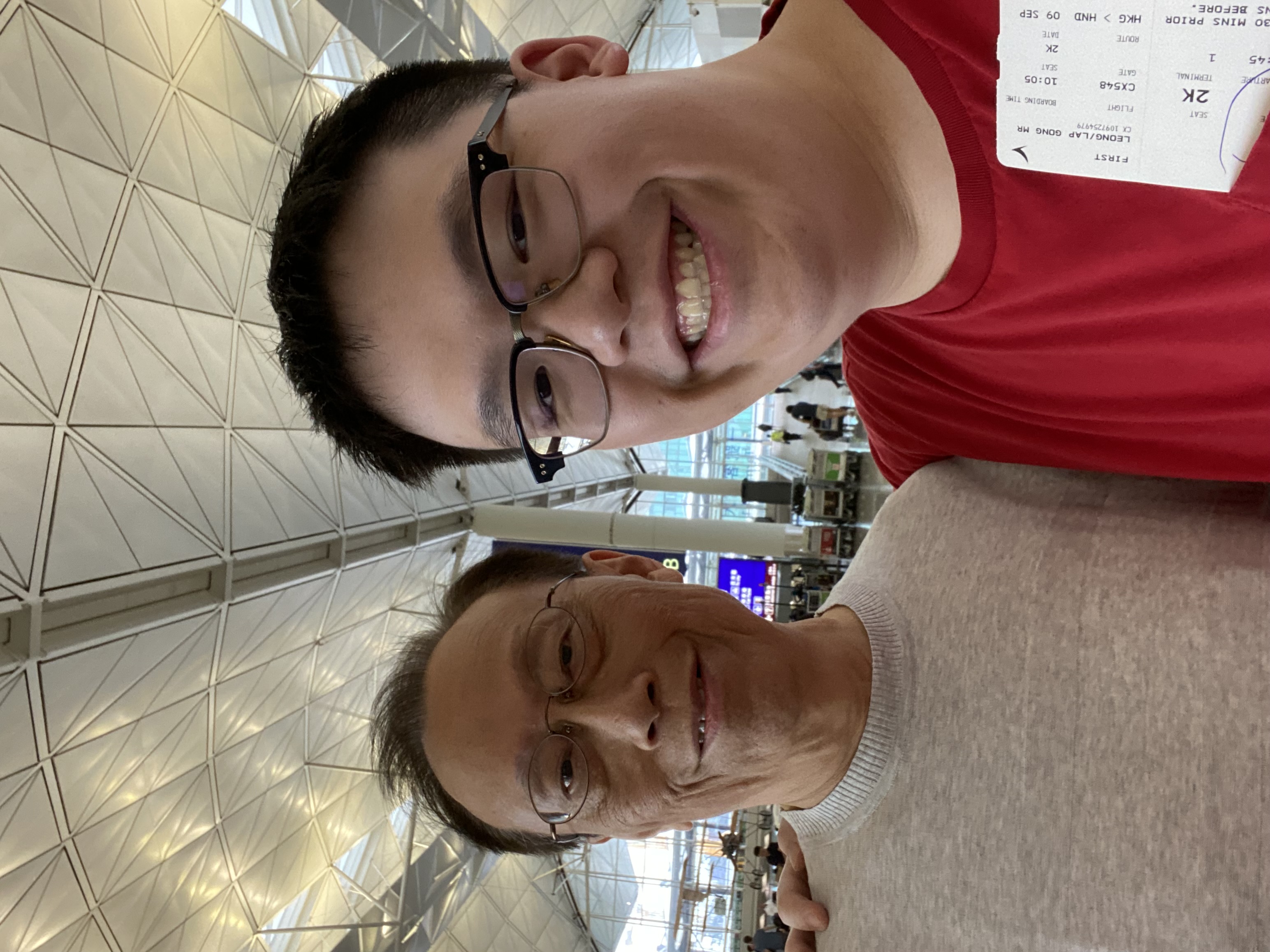
Leong Ka Cheong Christopher 於 2025 年 1 月 25 日離世。他的離開讓我整個人亂了套。儘管癌症已經把他折磨得形銷骨立,我和媽媽都深信他正在好轉。他的腫瘤科醫生堅稱激進的治療方案有效。爸爸不但頑強,更在穩步征服病魔。最新的掃描顯示腫瘤仍在生長(雖然非常緩慢),Dr. Gill 堅持那是「假性進展」。爸爸的身體雖然日漸衰弱,腦筋卻依然清晰而靈敏。他說:「我永遠不會丟下你。」
Dr. Gill 也許是我遇過最有同理心的醫生之一,但他幾乎從不抽時間跟媽媽以外的人討論爸爸的病情進展。這令我對他和他的一切判斷,積下了深深的敵意與懷疑。不過,他最終還是對了。化療和免疫治療實在「有效」得過了頭。其中一個腫瘤縮小得太多,竟把他的腸子撕穿了一個洞。儘管動了無數次手術,醫生始終無法真正把洞補好。爸爸的情況似乎每做一次介入治療就惡化一分。某個晚上,媽媽做了一個倉促的決定。翌日早上,他便走了。
你想做什麼都可以。」這就是我最需要從他口中聽到的一句話。無論我做什麼決定,爸爸永遠都是我最忠實的啦啦隊長、最不罷休的擁護者。每當他在場為我的利益發聲,我就會覺得自己無堅不摧。而當我覺得無堅不摧時,人生便不再那麼飄忽難測。這就是 Christopher Leong 永恆不滅的愛的力量。
十年前,高中畢業之後,我花了不少夜晚在公寓裏踱步,試圖破解一個大謎團:爸爸明明有時間、有精力、有資源去做任何他想做的事。他夢想開着法拉利在意大利鄉間兜風,也想多花時間留在香港。然而,他沒有和媽媽環遊世界,也沒有在週末陪伴孫兒,而是繼續工作到深夜來供養我。「我一天工作十四小時。」他自豪地說。他為什麼要這樣做?他已經不用再接送我上下學,也不想陪我去見精神科醫生,但在接下來光輝燦爛的十年裏,他仍會在我最需要他的時候出現。每當他覺得某個體能教練在向我收貴價,他就先發出措辭嚴厲的電郵,再親自上門會面。每當治療師想多了解我的情況,他總有時間陪我到他們的診室。說到我在社區學院的學業,他更會確保我拿到所有可能的學習便利安排。我至今仍能在腦海看見他坐在無障礙辦公室(Office of Accessibility)裏,耐心地向副主任解釋為什麼他的兒子考試需要雙倍時間、為什麼課堂筆記需要由助理謄寫。他神情放鬆,卻依然挺直腰板。他的語氣帶着同理心,銳利而清晰。他的用字簡潔而深思熟慮。Christopher Leong 正在帶 Mrs. Leach 遊覽他一路走來的漫長旅程,好讓她看見他在我身上看見的東西。對於一個從未真正接受「自閉症」或「學習障礙」這些概念的人來說,他卻日復日地尋找最合適的人,幫忙讓我的生活更快樂、更有意義、更獨立。他對談話治療的成效、對精神醫學的科學性疑慮極深,卻沒有妨礙他提供那種我視為理所當然的深厚支持。直到今天,我仍然想不明白 Christopher Leong 為什麼願意為我付出這一切。他給過我最好的答案,也是最簡單的一個:「你是我兒子,我愛你。」
Disclaimer: Forgive me for posting this a day late. Writing this post was incredibly exhausting. Paying tribute to the departed is always tricky, and a son’s father is no exception.
Leong Ka Cheong Christopher died on January 25th, 2025. His death had a discombobulating effect on me. Even though cancer had emaciated his body, my mother and I could’ve sworn he was making progress. His oncologist was adamant that his aggressive treatment plan was working. My father was not only resilient but was slowly but surely conquering his disease. The latest scans showed that the tumors were still growing (albeit very slowly). Dr. Gill had insisted that this was pseudo-progression. While my father’s body was failing, his mind was still sharp and stimulating. “I will never leave you,” he said.
Dr. Gill may have been one of the most compassionate physicians I had ever met, but he rarely made the time to discuss my father’s progress with anyone besides my mother. That led to a deep reservoir of hostility and skepticism towards him and his interpretations. However, he would end up being right. The chemotherapy and immunotherapy had worked too well. One of the tumors shrank so much it ripped a hole in his intestine. Despite countless surgeries, the doctors couldn’t really patch it. Dad’s condition seemed to worsen with each intervention. One evening, my mother made a rash decision. He died the morning after.
I am still devastated. Dad was everything to me.
My father and I rarely agreed on anything. Most of you reading probably believe that differences in success and intelligence are more genetic than environmental. Dad may not have been a blank slatist, but he thought people made their own luck. Like a lot of asian men of his generation, he had little to no sympathy for the unsuccessful and even less for those he considered dead weight.
Even though he had told me otherwise constantly, my mind continually wonders if Dad ever believed in the existence of mental illness. My father was certainly skeptical of psychiatry and did not like seeing his son being analyzed and scrutinized by what he felt were incompetent clinicians. If it was difficult for him to accept that his son was autistic, he couldn't believe that my severe innumeracy was anything but a product of laziness. “Why don’t you pick up a workbook?”
And yet, for all my infractions, Christopher Leong loved me with such deep and abiding devotion. He could’ve cut me off during the Hong Kong protests. He could’ve made his financial support conditional on learning Chinese and showing appreciation of my Chinese heritage. He could’ve demanded that I never talk about mental illness or autism in front of him or other people. He could’ve spent years trying to constrain and shape me into someone completely different. Instead of doing the smart thing, my father did what was hopefully the right thing. He showered me with an endless supply of love and never looked back.
I am still lost without him. That is why I am sharing the eulogy I gave at his funeral.
My father was sitting across from four teachers in a cold meeting room. Even though the lights were on, the atmosphere felt subdued. The only bright light that was penetrating this strangely frosty setting came from the stained windows. The old section of the school building was formerly a resplendent mansion, but he felt anything but splendid when he had to listen to an hour’s worth of concerning analysis about his son’s future. Christopher Leong was used to listening to and debating with a rotating cast of teachers, clinicians, advocates, and administrators. He had developed an uncanny ability to intuit which complaints about me were genuine and which were simply attempts at retaliation. He had heard it all before; he had crossed swords with so many well-meaning professionals. Christopher Leong was not afraid to humiliate someone if it meant they would get off my back. However, this meeting was much different. The teachers had nothing but good things to say about me. They loved me so much; they thought I should stick around for another year or two after graduation. “We think that Lap would benefit tremendously if he entered our transition program”, the kind old lady said. My studious history teacher chimed in, “It would ease his path into college or training”. Instead of asking probing questions or grilling the teachers, he smiled and thanked them for their time. As we walked through the parking lot, I could tell that he was incensed. We suddenly stopped. He took me aside and said, “Don’t listen to them.
You can do whatever you want.” It was all I needed to hear from him. Whatever my decision was, Dad would never stop being my biggest cheerleader and my most relentless advocate. Whenever he was around to assert my interests, I would feel invincible. And when I felt invincible, life no longer felt so uncertain. Such was the power of Christopher Leong’s undying love.
A decade ago, after graduating from high school, I spent many a night pacing my apartment, trying to solve a great mystery: my father had the time, energy, and resources to do whatever he wanted. He had dreams of driving around the Italian countryside in a Ferrari and wanted to spend more time in Hong Kong. However, instead of traveling the world with my mother or spending weekends with his grandchildren, he continued to work late into the night to support me. “I work 14 hours a day”, he said, with pride. Why would he do this? He no longer needed to drive me to and from school, nor did he have any desire to accompany me to the psychiatrist's, yet, for one more glorious decade, he’d continue to be there when I needed him the most. Whenever he thought a physical trainer was overcharging me, he’d send stern emails before meeting them in person. Whenever a therapist needed to know more about my situation, he’d always have the time to be at their office with me. When it came to my community college education, he’d make sure to secure every possible accommodation. I can still see him at the Office of Accessibility, sitting down and patiently explaining to the deputy director why his son needed double time on tests and for his class notes to be transcribed by an aide. Why's relaxed, yethe'ss ded till upright. His tone is empathetic, sharp, and clear. His words are concise and calculated. Christopher Leong was taking Mrs. Leach on a tour of his long journey so she could see what he saw in me. For a man who was never entirely comfortable with the concepts of Autism or learning disabilities, he spent his days trying to find the best people who would help make my life happier, more meaningful, and more independent. His deep doubts about the efficacy of talk therapy or the scientific validity of psychiatry didn’t stop him from providing the deep support that I took for granted. To this day, I am still dumbfounded as to why Christopher Leong went through all this effort to help me. The best answer he ever gave me was the simplest one,” You are my son, I love you.”